
Gravity separators
Precision density separation for cleaner, more consistent product
Bestseller
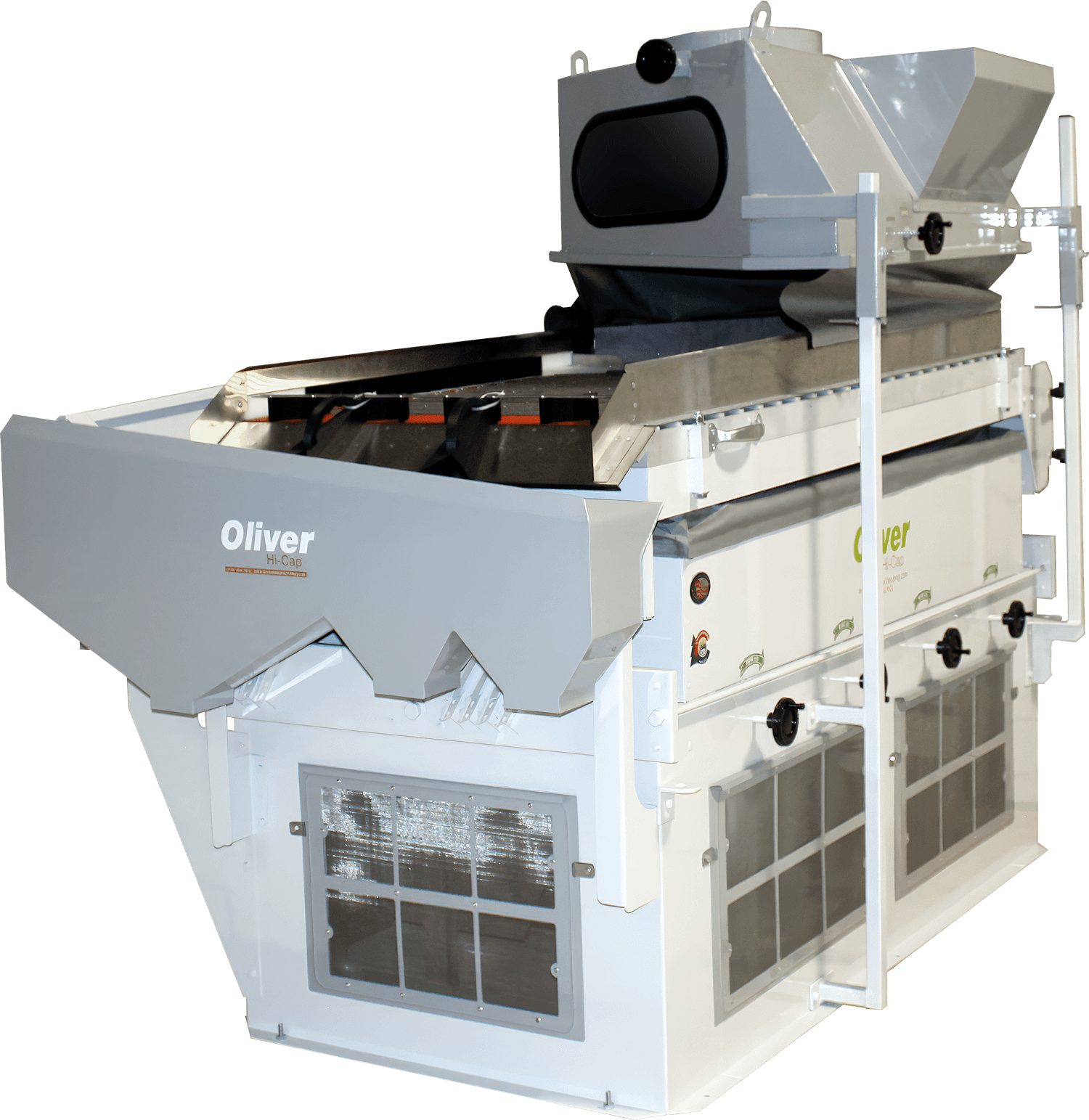
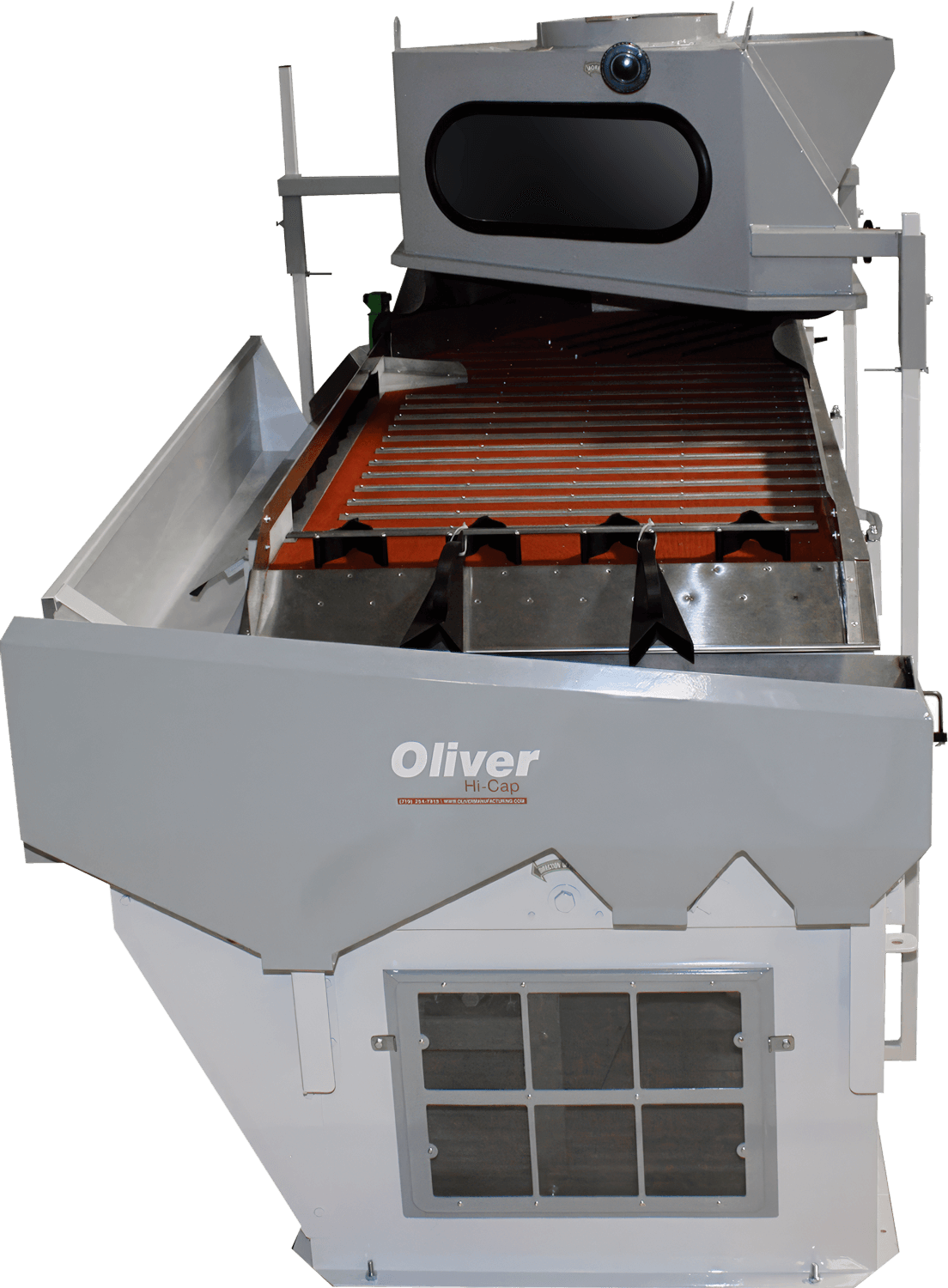
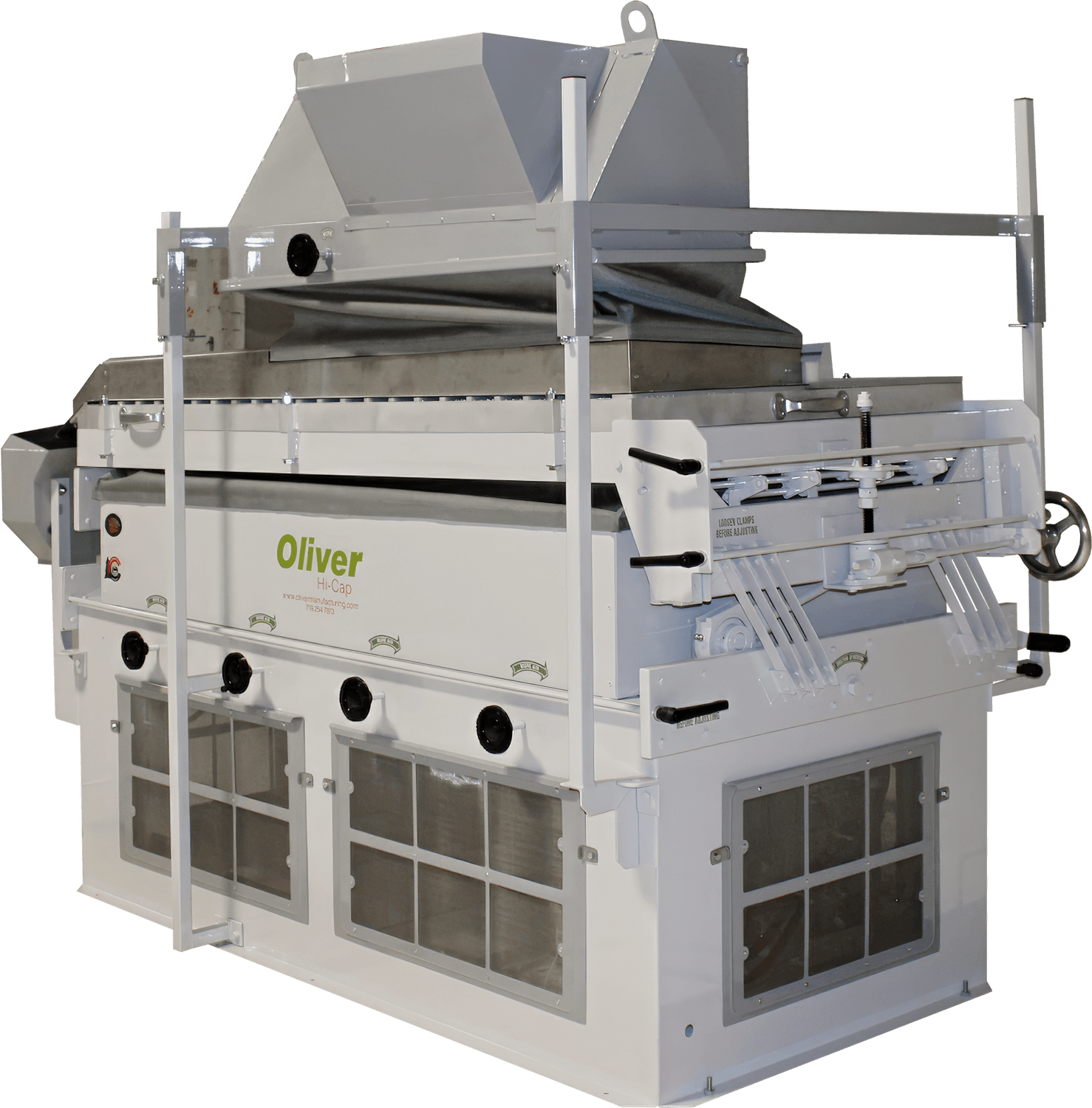
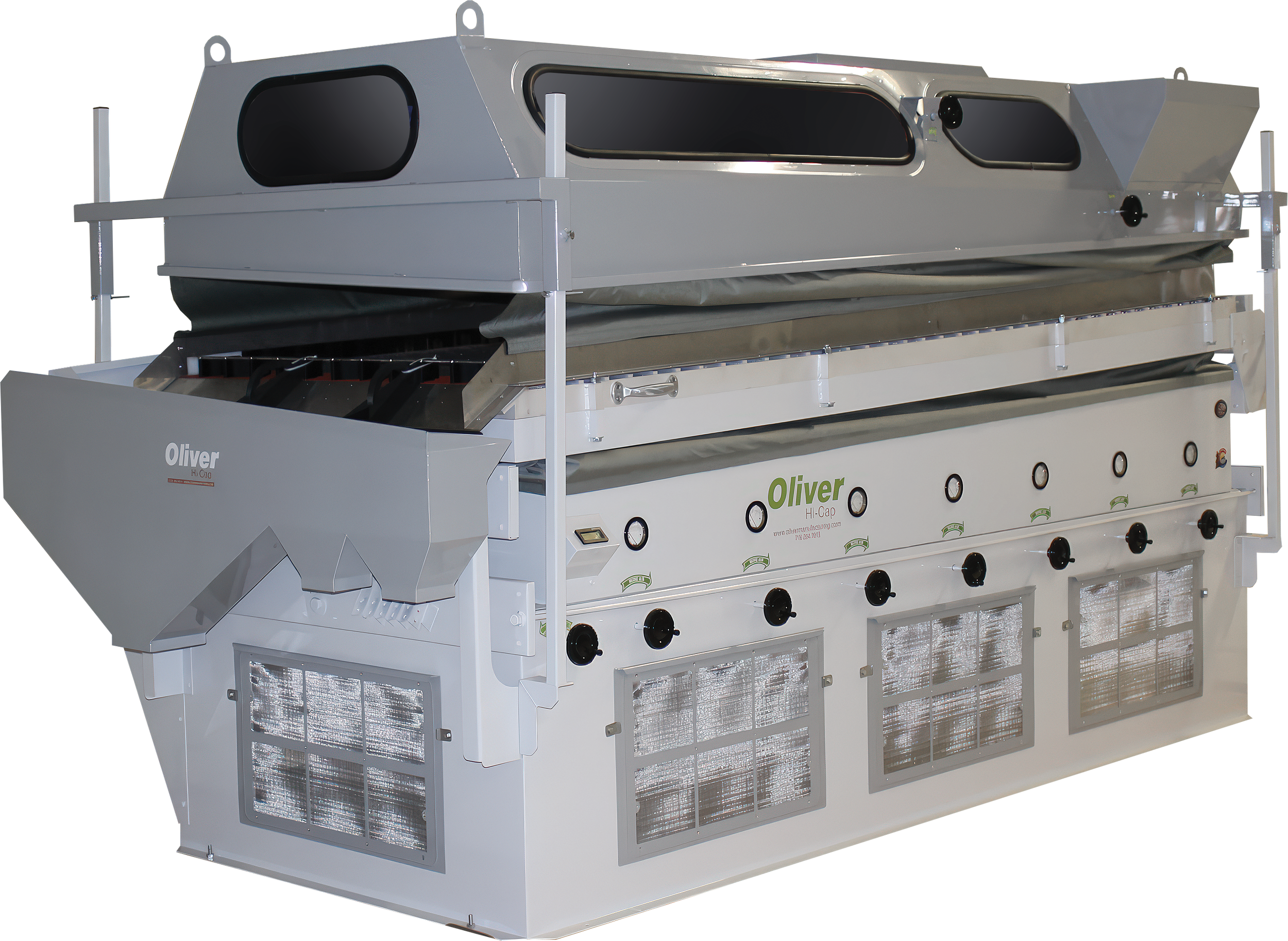
Hi-Cap gravity separator
Models: 51, 81, 161, 241
The most iconic gravity separator in the world, Oliver’s legendary Hi-Cap Gravity Separator is designed and constructed to deliver decades of reliable and predictable service. The Hi-Cap series efficiently separates continuous flow of granular products. Multiple fan zones allow for efficient control of product flow. Decks are designed and built to optimally perform for your specific product.
Oliver Hi-Cap density separators are fully adjustable in use for air volume, eccentric speed, side-tilt and rate of feed. These high-capacity separators include individual fan control, feeder, discharge hopper, and a customized deck for specific product applications.
Key features:
Processing up to 18,000 pounds per hour
Variable frequency drive for precise deck speed control
Intuitive manual controls with adjustable side tilt and end raise
Multi-fan system with independent fan dampening control
All adjustments safely made while in operation
How do Oliver Manufacturing gravity separators work?
Oliver Manufacturing’s gravity separator machines, commonly called Oliver gravity tables, divide heavier particles of material from lighter particles differing in their specific densities. On gravity separators, lighter particles are moved upward through the fluidized bed, and heavier particles sink downward. This air essentially makes the particles weigh themselves. The deck itself is tilted uphill and quickly shifting in a perpendicular eccentric motion. This allows the lighter particles to flow over the top of the heavier particles to the bottom of the deck while heavier particles are driven up and over the top. This process allows our gravity separators to separate both light and heavy contaminants from a product simultaneously.
The air, eccentric motion, deck tilt, end raise, and feed rate on an Oliver gravity separator are easily modified and can retain adjustment settings for multiple products. Adjustments to the air, motion, and tilt affect the quality of the separation, while the end raises, and feed rate affects capacity.
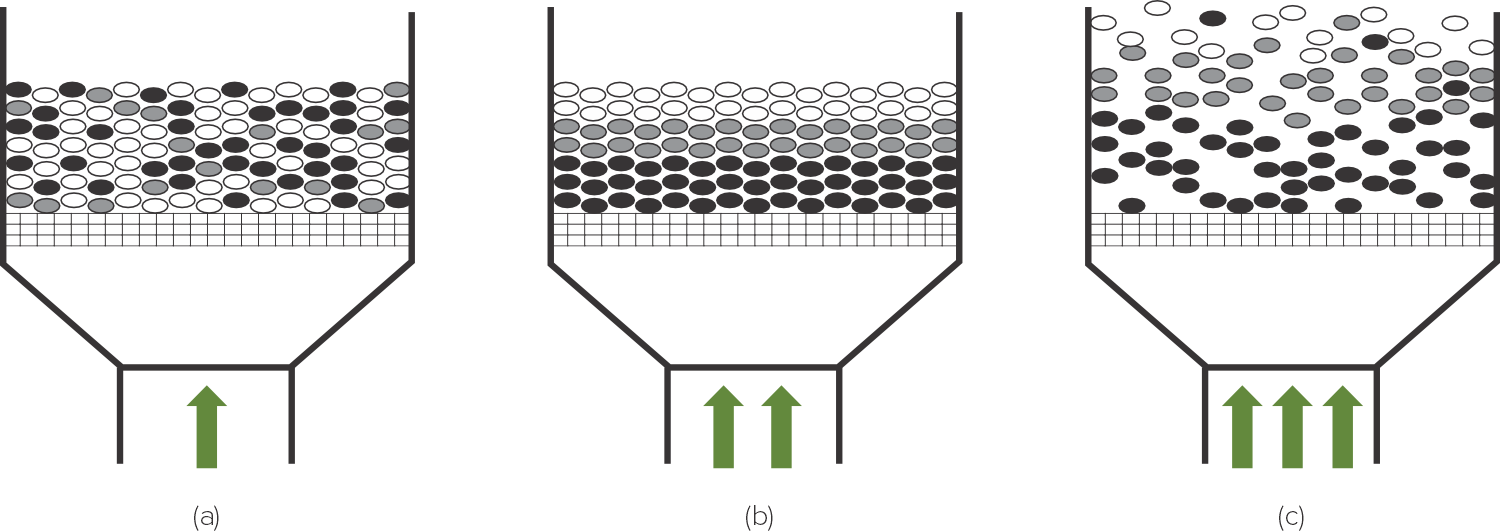
In the gravity separator stratification process, A shows mixed particles resting on the deck, B shows upward airflow fluidizing the material so lighter particles rise and heavier particles settle, and C shows air, deck tilt, and eccentric motion working together to separate particles by density.
Ready to upgrade your seed processing?
Contact our team for a personalized consultation and equipment recommendation