
Oliver equipment maintenance and preventive service
Keep your Oliver equipment performing at its best
Preventive maintenance for reliable, consistent performance
Oliver Manufacturing provides preventive maintenance, inspections, on-site service, and remote maintenance support to help gravity separators, destoners, sizers, dryers, and other processing equipment operate reliably and efficiently.
Oliver equipment is engineered to deliver decades of dependable service, but consistent performance depends on regular preventive maintenance. Routine inspection, cleaning, lubrication, adjustment, and replacement of wear components help protect your equipment investment while reducing unexpected downtime and maintaining processing performance.
Whether you operate an Oliver gravity separator, destoner, sizer, or fluidized bed dryer, our service team can help you develop a maintenance approach based on your equipment, operating hours, processing season, and application.
Preventive maintenance protects performance
Small maintenance issues can become expensive production problems when they go unnoticed. Worn components, improper adjustments, restricted airflow, dirty decks and filters, loose hardware, and other mechanical issues can gradually reduce equipment performance long before a machine stops operating.
Regular preventive maintenance helps identify these issues early and keeps critical systems operating as designed.
Depending on your Oliver equipment, routine maintenance may include:
Inspecting belts, bearings, drives, and moving components
Checking lubrication points and grease intervals
Cleaning decks, filters, screens, and airflow passages
Inspecting deck coverings, riffles, and other wear components
Checking eccentric drives and counterbalance systems
Inspecting hydraulic systems and fluid levels
Checking electrical controls, sensors, and connections
Verifying machine settings and mechanical adjustments
Replacing worn components before they affect production
Preventive maintenance helps keep Oliver equipment running reliably, reduce unexpected downtime, and extend equipment life.
Plan maintenance around your processing season
The best time to address equipment problems is before production depends on the machine.
Oliver recommends incorporating a thorough equipment inspection into your pre-season or post-season schedule. Preventive maintenance during planned downtime gives your team time to identify wear, order replacement parts, make repairs, and verify operation before the next processing run.
For high-use equipment, maintenance should also be scheduled according to operating hours and the recommendations for your specific Oliver model.
On-site and remote maintenance support
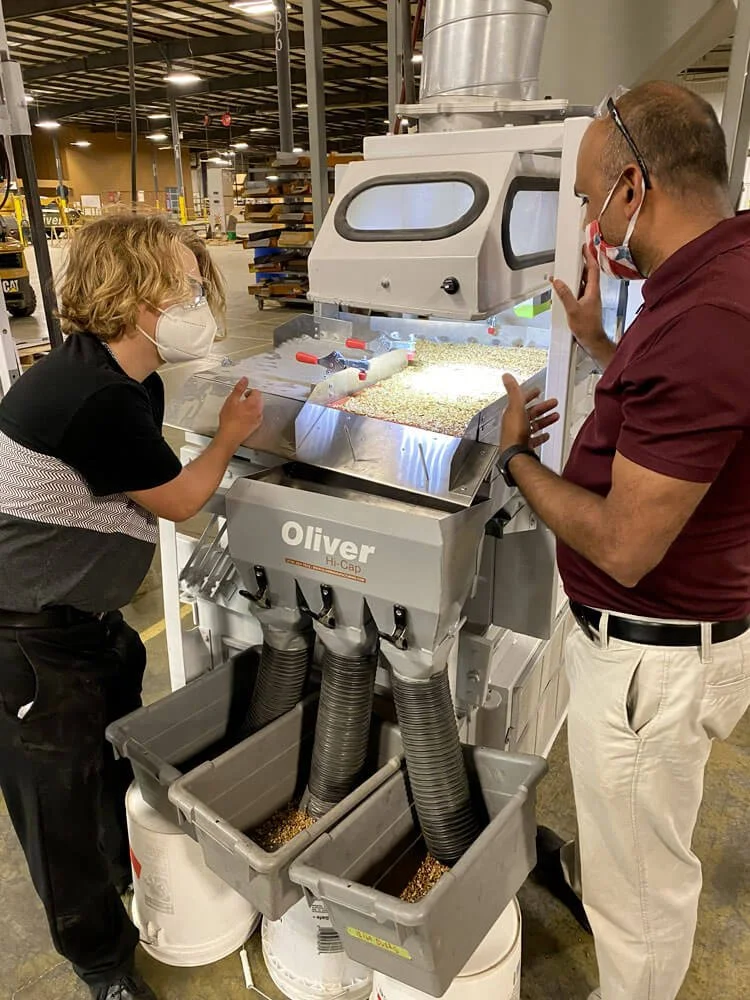
Some maintenance can be handled by your own team. Other situations benefit from an experienced Oliver technician. Oliver can help evaluate equipment condition, identify maintenance priorities, answer technical questions, and provide guidance for keeping your processing equipment operating properly.
Maintenance resources and support include:
On-site equipment inspection and service
Phone and remote technical support
Seasonal maintenance planning
Equipment manuals and operating specifications
Genuine Oliver replacement parts
Maintenance and operator training
Repair and refurbishing recommendations

Maintenance built around your processing schedule
Preventive maintenance works best when it happens before equipment problems interrupt production. Oliver can help you plan maintenance around seasonal shutdowns, scheduled downtime, and changing processing demands so your equipment is ready when you need it most.
Whether you operate year-round or depend on a concentrated processing season, proactive maintenance can help identify worn components, developing issues, and performance concerns before they become costly downtime.
Keep proven Oliver equipment working longer
Oliver equipment is built for a long service life, and many machines remain productive decades after installation. Regular maintenance helps protect that investment by keeping critical components in proper working condition and identifying opportunities to restore performance as equipment ages.
Our technicians understand Oliver equipment from the inside out. From current-generation machines to legacy models, we can help determine what your equipment needs to continue delivering reliable, consistent results.
When maintenance becomes repair
Routine maintenance can uncover issues that require more than adjustment or preventive service. When that happens, Oliver can help determine the appropriate next step.
Depending on the condition of your equipment, that may include replacement parts, component repair, additional troubleshooting, or a more comprehensive refurbishment. Our goal is to help you make an informed decision based on equipment condition, expected service life, processing requirements, and the economics of repair versus replacement.
Stay ahead of equipment downtime
Don’t wait for a small maintenance issue to become a production problem. Oliver’s experienced service team can help evaluate your equipment, identify maintenance needs, and develop a plan to keep your processing operation running reliably.
Frequently asked questions about Oliver maintenance
-
A coated overcover provides additional traction to help control and move product down the gravity separator deck. The coating also helps protect the overcover from wear, extending its service life compared with plain steel.
-
Dual Lock provides a stronger, more durable connection than traditional hook-and-loop Velcro. Unlike Velcro, which can collect dirt and lose holding strength over time, Dual Lock locks to itself and can be repeatedly connected and disconnected with minimal wear.
-
A pillow block bearing, sometimes called a saddle bearing, supports and holds a rotating shaft in position. A take-up bearing allows adjustment of the shaft position to maintain proper alignment or tension and accommodate movement within the machine.
-
Poor product flow on a gravity separator can be caused by an eccentric drive problem, clogged undercover, blinded overcover, insufficient airflow, or another mechanical issue. Check the deck coverings, airflow, eccentric drive, and machine mechanics when diagnosing poor product movement.
-
Oliver gravity separators use food-grade hydraulic oil or transdraulic oil. The complete hydraulic system holds approximately three gallons of oil
-
Oliver equipment should generally be greased once a year or every 1,000–1,500 operating hours. Follow the maintenance recommendations for your specific machine and operating conditions.
-
A dust hood is recommended to improve operator safety and housekeeping around your gravity separator. It helps contain airborne dust and reduces buildup that can clog external filters, screens, and surrounding equipment.
-
Clean gravity separator filters with a shop vacuum and use compressed air to clean material from the deck while the machine is running. Regular cleaning helps maintain proper airflow and consistent separation performance.
-
Riffles help control product movement across a gravity separator deck. They help direct heavier, desirable product toward the appropriate discharge area while slowing material that would otherwise travel too quickly down and off the deck.
-
Determine the handing of an Oliver gravity separator while standing at the discharge end of the machine. The side where the heavy product discharges identifies the machine's hand.
-
A counterbalance reduces machine vibration and shaking during gravity separator operation. By balancing the machine's reciprocating motion, it allows the eccentric drive to operate more smoothly and helps provide stable, consistent performance.
-
Oliver Platinum Series equipment provides greater automation, precision, and operator control. Features include remote service support, improved adjustment controls, saved machine settings, programmable recipes, and communication capabilities for integration with plant operations.
-
A typical Oliver gravity separator operates between approximately 480 and 520 RPM. The ideal operating speed can vary depending on the machine, product, and processing conditions, so operators should adjust the machine based on separation performance and the recommendations for their specific model.
Oliver Manufacturing. Almost a century of innovation.
For nearly a century, Oliver Manufacturing has led the way as a gravity separator manufacturer with high-quality products that businesses in the seed, nut, coffee, lumber, recycling, and mining industries can rely on. We’ve always been committed to combining durability and efficiency in our equipment, and these gravity separators are no different. Contact us today to learn more about how these machines can save you time and money!