Gravity separators for seed, grain, food, and material processing
Precision density separation for cleaner, more consistent product
What is a gravity separator
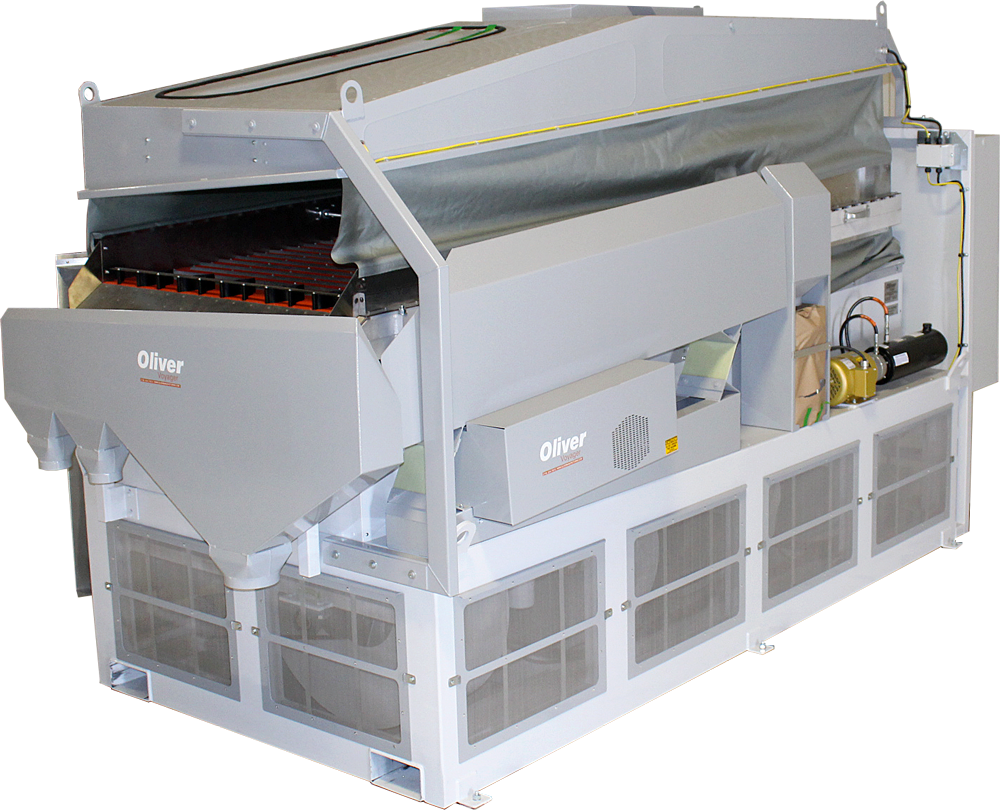
Gravity separators is a type of dry separation machinery used for the seed cleaning equipment, industrial food processing equipment, and industrial recycling equipment industries. They can process a complex mixture of dry materials and separate the different individual particles depending on their density, resulting in a continuous gradation across a range of different densities. Seed gravity separators are also commonly referred to as gravity tables, density separators, and air tables.
Gravity separator uses
While they are most often used for seed and grain operations, seed gravity separators, or gravity table separators, have a variety of applications. Oliver separators can be used to separate seed, grain, dry beans, mineral sand, rubber, shredded wire, and other dry bulk materials. They’re an essential piece of equipment for any industry that processes a lot of dry materials every day.
Four solutions. One standard of separation.
-
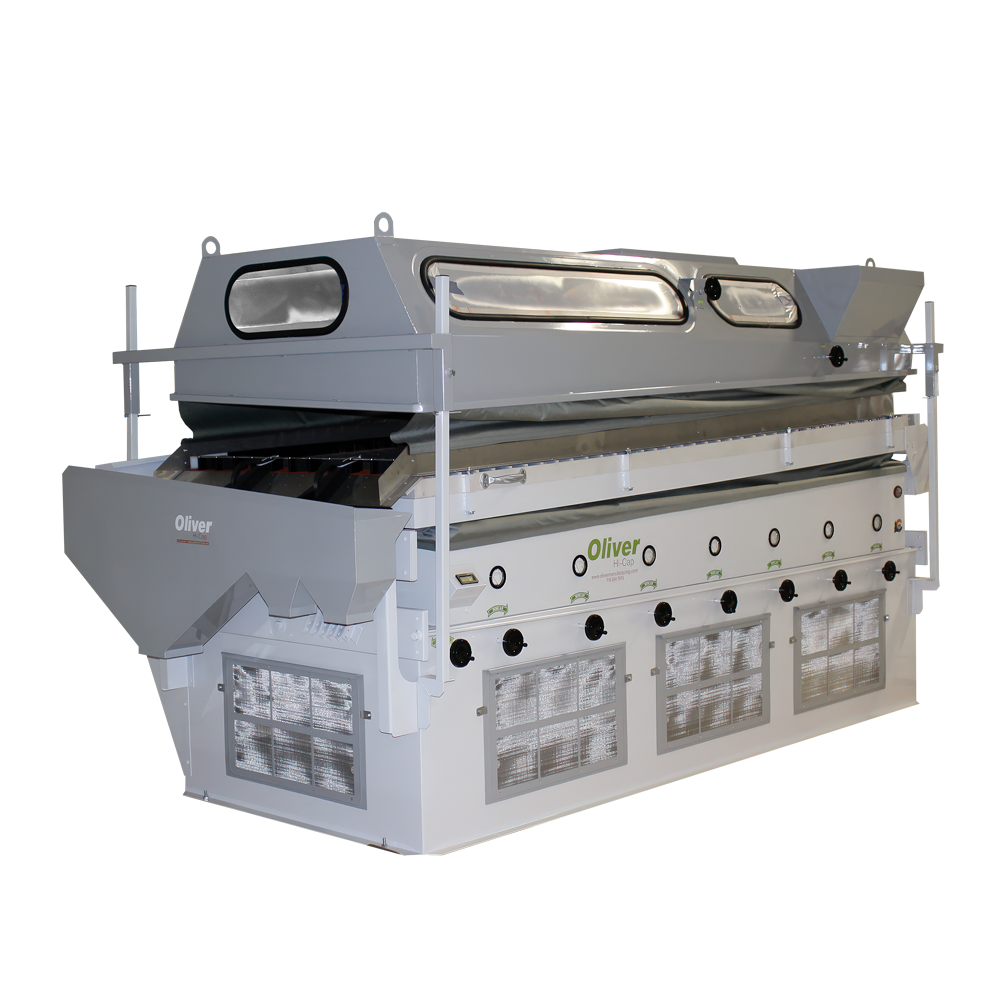
Hi-Cap Separators
The High-Cap series improves throughput, consistency, and final product quality across demanding processing operations. Operated manually.
-
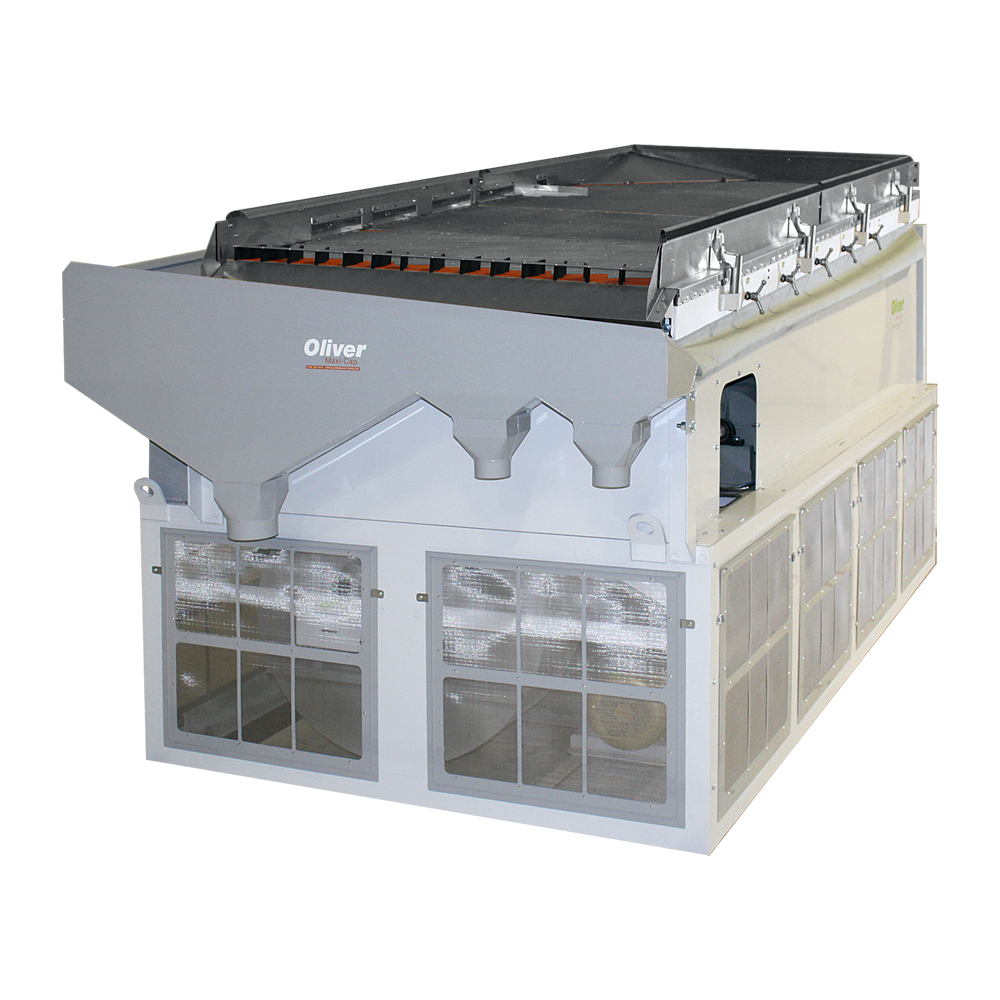
Maxi-Cap Separators
Two to three times the capacity of a Hi-Cap Gravity. The Maxi-Cap series comes standard or platinum. Operated hydraulically or by touchscreen control.
-
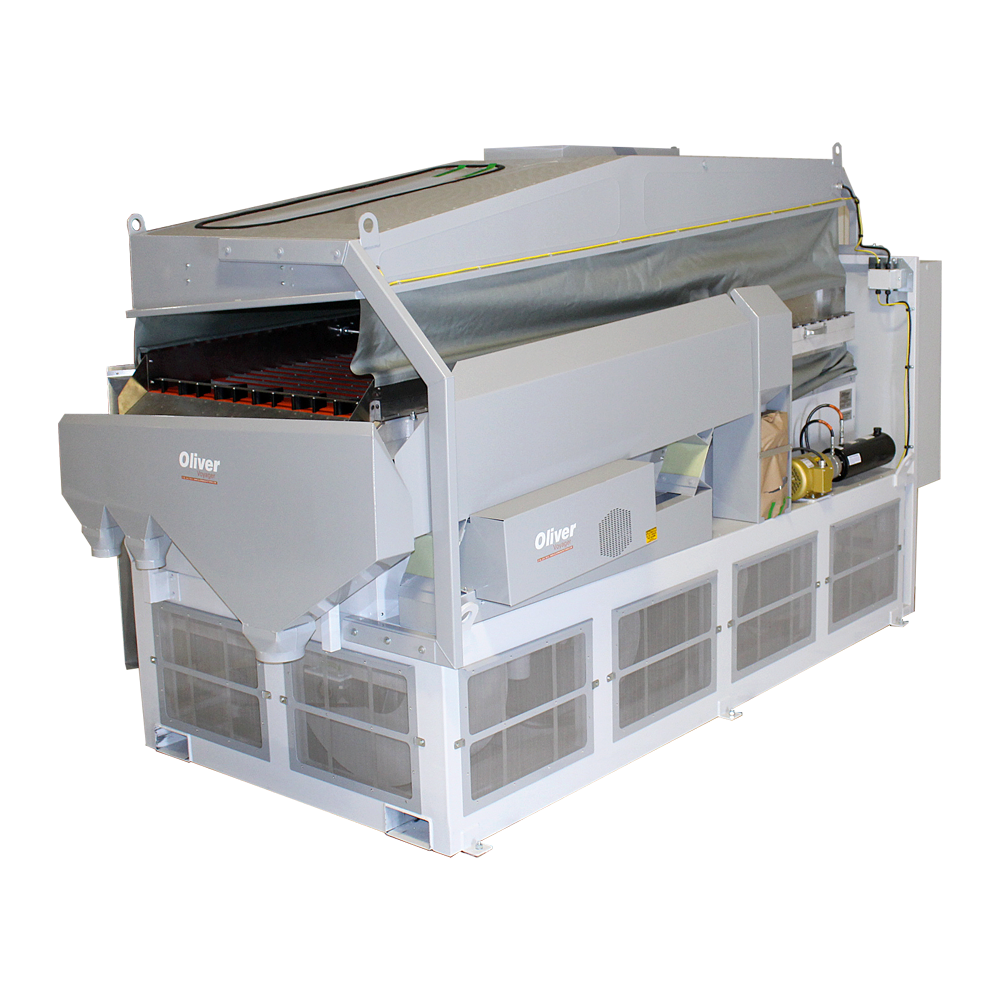
Voyager Separators
Precision controls for optimal density separation. Save and recall recipes for smooth operation. Operated by the touchscreen interface, save settings and view real-time machine functionality.
-
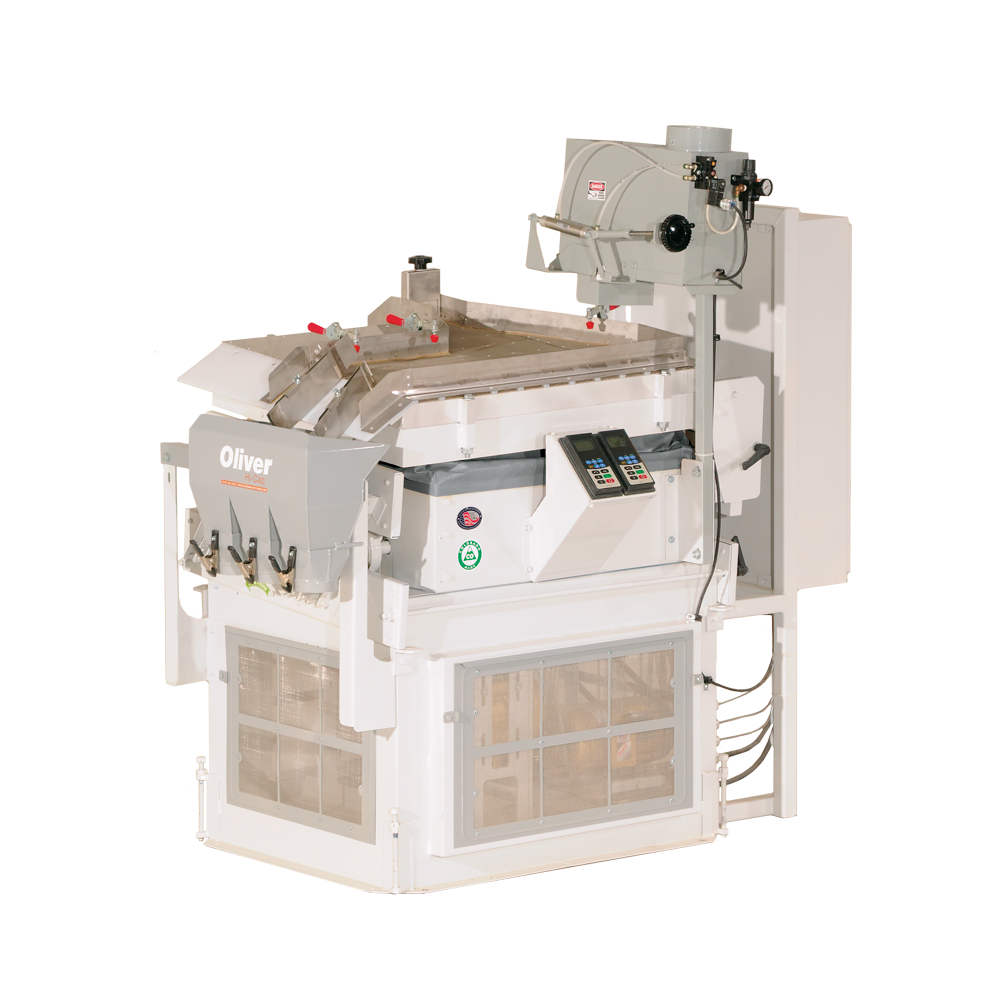
Laboratory Separators
The Oliver lab gravity is designed for smaller batches and capacities. Efficient cleaning systems remove impurities from all types of crops and dry materials.
How do Oliver Manufacturing gravity separators work?
Oliver Manufacturing’s gravity separator machines, commonly called Oliver gravity tables, divide heavier particles of material from lighter particles differing in their specific densities. On gravity separators, lighter particles are moved upward through the fluidized bed, and heavier particles sink downward. This air essentially makes the particles weigh themselves. The deck itself is tilted uphill and quickly shifting in a perpendicular eccentric motion. This allows the lighter particles to flow over the top of the heavier particles to the bottom of the deck while heavier particles are driven up towards the top of the deck. This process allows our gravity separators to separate both light and heavy contaminants from a product simultaneously.
The air, eccentric motion, deck tilt, end raise, and feed rate on an Oliver gravity separator are easily modified and can retain adjustment settings for multiple products. Adjustments to the air, motion, and tilt affect the quality of the separation, while the end raises, and feed rate affects capacity.
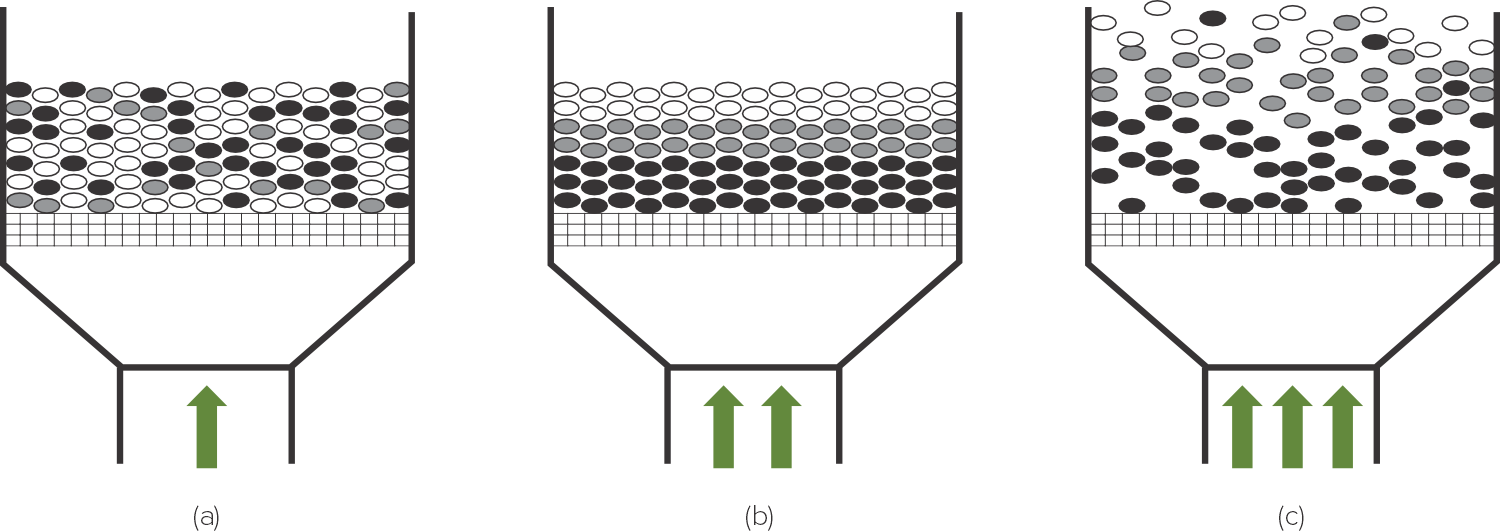
In the gravity separator stratification process, (a) shows mixed particles resting on the deck, (b) shows upward airflow fluidizing the material so lighter particles rise and heavier particles settle, and (c) shows air, deck tilt, and eccentric motion working together to separate particles by density.
Frequently asked questions about Oliver gravity separators
-
A hi-cap master includes an aspirating feeder, a VFD for eccentric speed (deck shake) control, air indicator gauges allowing the operator to view zonal air pressures, counterbalance, and round discharge transitions on the discharge hopper.
The standard includes a standard feeder, mechanical variable speed for the eccentric deck shake control, and square discharge transitions on the discharge hopper.
-
Product yield varies and is dependent on seed or material being processed.
Precise zonal air control can reduce the number of good seed you currently have going to discard; this applies to both the Voyager and Platinum models. We have witnessed 1-5% fewer good seed in the discard fraction when operating a Voyager or Platinum.
Recipe settings highly increase this outcome as operators can save settings for a better starting point when operating to reduce seed loss.
-
Manual models offer a simpler design and require more attentive operator oversight.
Automated models offer additional technology and advanced separator control like fine tuning adjustments.
-
Capacity ranges from 700lbs per/hr. to 42,000lbs per/hr.
It is typically dependent upon on deck size and type of seed/material. Please see product specifications for examples of capacity.
-
Operating a gravity separator is often considered an art form which takes practice and applied knowledge.
We offer onsite and online trainings for operating a gravity. You can also see (product manuals) for guidance.
-
Yes, Oliver dryers can be used for both pelletizing and encrustment applications. However, proper it sizing is especially important because these processes typically add more moisture to the seed than the standard treatment applications.
For these applications, the mid-gate and end-gate can be used to retain the seed to obtain a longer drying duration, allowing time for effective moisture removal.
We typically recommend the DVX Dryer because its mid-gate and end gate configuration provides the additional control and retention time need to effectively dry pellets or encrustments.
The gravity separator
Premium cabinet upgrade
Introduction to Oliver’s platinum line of separators
Oliver Manufacturing gravity separators
Gravity technical support
Ready to upgrade your seed processing?
Contact our team for a personalized consultation and equipment recommendation